NASA Scientific Discovery: Deep Space Observation by James Webb Space Telescope
High-resolution spectroscopic imagery from NASA’s Open Science Data Network unveils ancient star clusters, gravitational lensing phenomena, and mineral dust dynamics in far-reaching galactic structures.
Executive Summary
In a landmark analytical breakthrough released through the NASA Open Science Data Network, spectroscopic observation captured by the James Webb Space Telescope (JWST) has mapped previously obscured cosmic mineral dust distributions, deep-field star clusters, and light-bending gravitational lensing across deep space. The spectroscopic imagery provides astrophysicists with precise telemetry to re-evaluate early galactic formation and interstellar element synthesis in the early universe.
Verified Key Takeaways
- Spectroscopic Mapping: Precision spectroscopy confirms rich distributions of cosmic mineral dust (including silicates and complex carbon compounds) in early galaxies.
- Gravitational Lensing Amplification: Massive galactic foreground clusters acted as cosmic magnifying lenses, enabling JWST to capture distant stellar nurseries with unprecedented signal clarity.
- Rapid Metal Enrichment: Data indicates that early cosmic dust formation occurred significantly faster post-Big Bang than traditional astrophysic models previously predicted.
- Open Science Data: The official spectroscopic raw imagery and telemetry have been verified and integrated into the public NASA Open Science Data Network repository for global peer research.
Unveiling cosmic Foundations through Infra-Red Spectrometry
Astrophysicists analyzing the latest multi-channel telemetry from the James Webb Space Telescope (JWST) have documented a fundamental leap in our understanding of deep space structures. Utilizing near-infrared and mid-infrared spectrographs, Webb peered through dense cosmic clouds to capture the chemical signatures and photon emissions of stellar clusters billions of light-years away.
Unlike optical observatories which suffer from heavy interstellar dust extinction, Webb's advanced infrared instruments penetrate cosmic veils. The telemetry released via NASA's Open Science Data Network illustrates how mineral dust—composed predominantly of magnesium-rich silicates, iron grains, and polycyclic aromatic hydrocarbons—serves as the fundamental building block for future planetary systems.
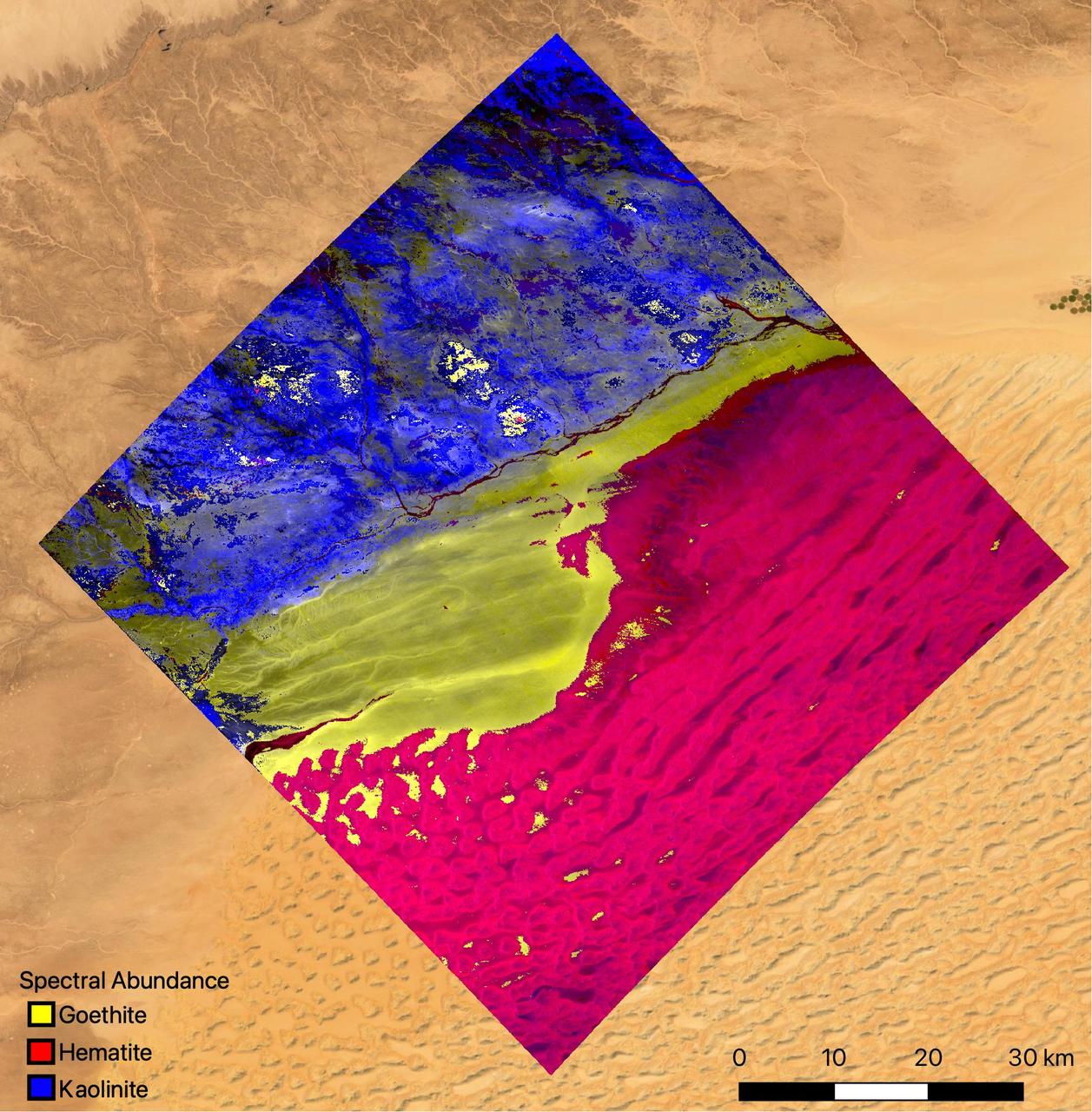
Gravitational Lensing: Nature's Optical Telescope
A central feature of the discovery lies in the physical phenomenon known as gravitational lensing. Predicted by Albert Einstein's General Theory of Relativity, massive galaxy clusters located in the foreground warp the surrounding space-time fabric. Light traveling behind these massive nodes is bent, magnified, and duplicated, producing magnified arcs of extremely distant background galaxies.
By capitalizing on these natural cosmic amplifiers, JWST's spectrographs isolated specific emission lines from early deep space targets. This enabled researchers to break down galaxy light into individual components, determining gas densities, ionization levels, and precise redshift valuations.
| Observation Parameter | Legacy Space Observatories | JWST Deep Space Observation (2026 Data) |
|---|---|---|
| Wavelength Range | Visible / Near-UV / Limited Infrared | Near-Infrared (NIR) & Mid-Infrared (MIR) (0.6–28 μm) |
| Dust Extinction Impact | High signal loss due to opaque dust clouds | High transparency; reveals embedded star clusters |
| Gravitational Lensing Resolution | Coarse arc detection; partial galaxy profiles | Sub-arcsecond spectrographic arc separation |
| Chemical Dust Profiling | Indirect modeling based on light absorption | Direct spectroscopic mineral dust emission lines |
Analytical Breakdown: Stellar Cluster Dynamics & Mineral Dust Enrichment
Prior to these observations, standard cosmological theory postulated that heavy elements and mineral dust accumulated very gradually over multiple generations of massive stellar explosions. However, the verified spectral lines from target PIA25424 demonstrate an unexpectedly rapid enrichment of mineral dust in young star-forming regions.
This rapid enrichment implies that early supermassive stars matured, synthesized heavier elements (such as silicon, oxygen, and carbon), and seeded the interstellar medium via supernovae much faster than early cosmological simulations anticipated.
Fact Check & Myth Busting: Addressing Scientific Misconceptions
Myth: Gravitational lensing means the telescope's lenses are physically distorting images or failing.
Fact: Gravitational lensing is a verified relativistic phenomenon caused by massive galactic gravitational fields bending space-time itself, serving as a natural cosmological magnifying glass without any optical instrument distortion.
Myth: These images represent real-time live video streams from deep space.
Fact: These outputs are composite spectroscopic data and long-exposure infrared photon integrations gathered over hours of targeted observations and calibrated via scientific data pipelines.
Strategic Scientific Implications
The dissemination of this dataset across NASA's Open Science Data Network marks a significant milestone in open-access astronomy. Research institutions worldwide can now cross-analyze JWST’s raw infrared telemetry with terrestrial radio array data (such as ALMA) to build complete, multi-messenger models of galactic evolution.
As astrophysicists refine these models, the findings will inform future deep-space observational missions, exoplanetary atmosphere characterization efforts, and fundamental physics research into the nature of dark matter distribution within lensing clusters.
Frequently Asked Questions
Verified Primary Sources & Portals
- NASA Open Science Data Network: https://data.nasa.gov
- NASA Image and Video Library (Asset PIA25424): https://images.nasa.gov/details/PIA25424
- Space Telescope Science Institute (STScI) JWST Science Operations: https://webbtelescope.org
- NASA Official Portal: https://www.nasa.gov


No comments:
Post a Comment