NASA Scientific Discovery: Comet 220P in Outburst Unleashes 20,000x Luminosity Surge
In a stunning turn of celestial dynamics, periodic Comet 220P/McNaught has undergone back-to-back explosive outbursts, elevating its brightness by an unprecedented factor of 20,000. Normally a faint, telescope-only traveler in the vast void between Mars and Jupiter, the comet has suddenly become visible to skywatchers equipped with standard binoculars and long-exposure astrophotography systems.
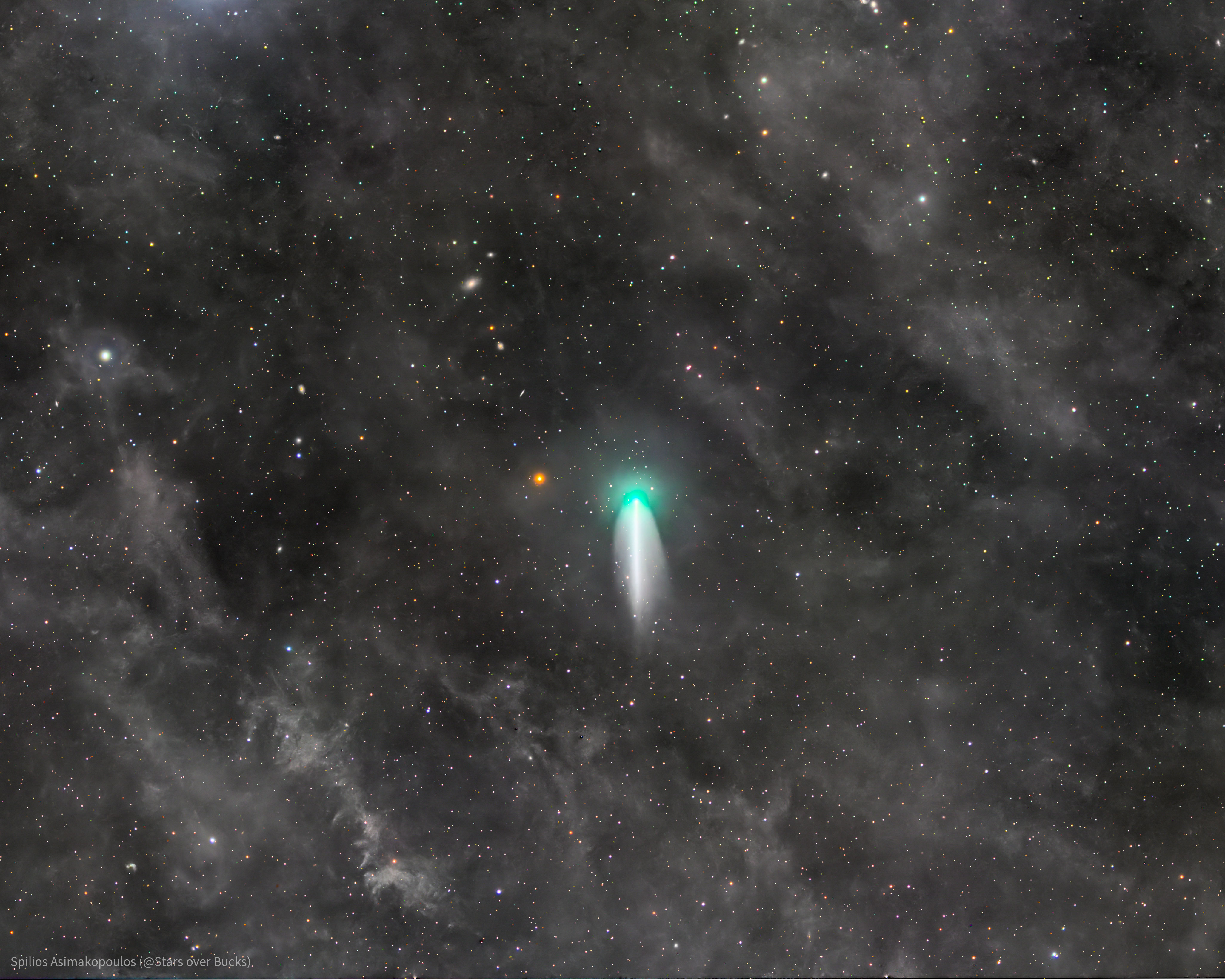
Table of Contents
- The Unprecedented Outburst: An Awakening in the Deep
- Orbital Profile and Baseline Characteristics of 220P
- Scientific Hypotheses: What Caused the 20,000-Fold Brightening?
- The Science Behind the Emerald Glow and Dust Tail
- Observational Window and October Trajectory
- NASA Telemetry & Open Science Network Updates
- Frequently Asked Questions (FAQs)
- Final Insights and Skywatching Summary
The Unprecedented Outburst: An Awakening in the Deep
Comet 220P/McNaught has long been classified by planetary scientists as a modest, relatively inactive Jupiter-family periodic comet. Under standard conditions, it moves unobtrusively through its orbit, reflecting very little light and requiring specialized research-grade telescopes to track its faint stellar magnitude.
However, recent optical and telemetry evaluations from global observatories and NASA observation networks confirmed that Comet 220P underwent two consecutive, catastrophic outbursts within a single orbital season. This rapid expulsion of subsurface volatiles and refractory dust caused an astronomical luminosity increase of approximately 20,000 times its normal quiet-state baseline.
Key Astronomical Takeaway
An increase in luminosity of 20,000x corresponds to a jump of nearly 10.75 magnitudes on the astronomical scale. This rapid shift transformed Comet 220P from an invisible magnitude ~17-18 object into a viable target for amateur binoculars and small-aperture imaging setups.
Orbital Profile and Baseline Characteristics of 220P
Discovered by prolific astronomer Robert H. McNaught, Comet 220P maintains a stable periodic orbit with an orbital period exceeding 5 years. Its trajectory keeps it positioned predominantly within the main asteroid belt, traveling in the gravitational corridor between Mars and Jupiter.
Because 220P spends its life cycle relatively distant from the intense solar radiation encountered by sungrazing comets, major thermal outbursts of this scale were previously considered rare for this specific body. Its unexpected activity provides astrophysicists with an exceptional laboratory to analyze icy planetesimal composition without waiting for deep-space missions.
Scientific Hypotheses: What Caused the 20,000-Fold Brightening?
Astrophysicists and cometary specialists are investigating multiple mechanisms to explain the rapid physical release that powered this event. While definitive telemetry continues to be modeled, two primary scientific hypotheses have emerged:
1. Subsurface Gas Reservoirs and Explosive Cryovolcanism
As the comet reaches warmer sectors of its orbit, heat conducts through its porous outer crust. If pockets of highly volatile super-ices—such as carbon monoxide (CO), carbon dioxide (CO2), or methane (CH4)—reach sublimation temperatures beneath an insulating mantle, the pressure builds relentlessly until the crust fractures. The resulting explosive venting hurls metric tons of dust and gas into space, creating an immense reflective cloud.
2. Structural Collapse and "Comet Quakes"
Another compelling mechanism is internal mechanical failure. Rotational spin-up driven by asymmetric outgassing or tidal stresses can trigger structural instability, resulting in a "comet quake" or localized nucleus collapse. When fresh, pristine icy layers are exposed directly to vacuum and sunlight, instant sublimation accelerates the coma expansion exponentially.
The Science Behind the Emerald Glow and Dust Tail
The featured NASA exposure captured from South Africa provides rich spectroscopic data. The prominent bright green coloration of the coma (the comet's atmosphere) is primarily generated by resonance fluorescence of diatomic carbon (C2) and cyanogen (CN) molecules under solar ultraviolet irradiation.
As solar photons break down organic materials ejected from the core, the resulting photochemical reactions emit light strongly in the green wavelengths (around 518 nanometers). Meanwhile, solar radiation pressure and the solar wind push heavier silicate dust particles away, creating the distinct, foreshortened dust tail visible in long exposures.
Observational Telemetry Note
The physical coma surrounding Comet 220P has expanded to tens of thousands of kilometers across. While the nucleus remains tiny (likely just a few kilometers in diameter), this massive cloud of illuminated dust and gas is what reflects solar light back to terrestrial sensors.
Observational Window and October Trajectory
For amateur astronomers and astrophotographers, time is of the essence. Comet 220P will reach its closest safe approach to Earth in October, passing at an approximate distance of 1 Astronomical Unit (AU)—equivalent to the average distance between the Earth and the Sun (~150 million kilometers).
Following this October passage, Comet 220P is projected to fade rapidly as the newly exposed volatile reservoirs deplete and the expanded dust cloud dissipates into interplanetary space. The comet will then embark on its return trek toward the outer boundary of its orbit between Mars and Jupiter.
Tips for Observers
Equipment: 7x50 or 10x50 binoculars from dark sky sites; telescopes with 80mm+ aperture equipped with astrophotography filters will resolve the emerald coma clearly.
• Technique: Use stacked, long-duration CCD/CMOS exposures to capture the subtle dust tail and outer gaseous halo.
• Timing: Best viewed during moonless night windows before perihelion dispersion diminishes the comet's apparent magnitude.
NASA Telemetry & Open Science Network Updates
The tracking of transient solar system bodies like 220P/McNaught relies on coordinated open-data initiatives. NASA's Astronomy Picture of the Day (APOD) service—an essential public conduit for high-resolution planetary releases—has announced an infrastructure transition, migrating its primary institutional domain from apod.nasa.gov to science.nasa.gov/apod.
This modernization ensures seamless scientific data distribution, higher bandwidth for deep-space telemetry, and wider global educational access as researchers track rare cometary outbursts worldwide.
Frequently Asked Questions (FAQs)
What is Comet 220P/McNaught?
Comet 220P/McNaught is a periodic comet discovered by Robert H. McNaught. It orbits the Sun every 5+ years, staying primarily in the orbital zone between the planets Mars and Jupiter.
How rare is a 20,000-fold brightness outburst in comets?
While minor outbursts are common among active comets, an explosive surge of 20,000 times (~10+ magnitudes) is an exceptional event, often indicative of major cryovolcanic venting, internal pressure bursts, or severe structural disruption.
Can Comet 220P be seen with the naked eye?
Currently, the comet is within reach of binoculars and consumer astrophotography gear under dark skies, but it remains just below the typical naked-eye threshold for urban or suburban observers.
Does Comet 220P pose any danger to Earth?
None whatsoever. Comet 220P will pass roughly 1 Astronomical Unit (approx. 150 million kilometers) away from Earth in October, posing zero collision risk while providing an extraordinary scientific observation opportunity.
Why does the head of the comet appear green?
The emerald glow is caused by diatomic carbon (C2) and cyanogen molecules in the comet's coma fluorescing under ultraviolet solar light in the vacuum of space.
Final Insights and Skywatching Summary
The extraordinary awakening of Comet 220P/McNaught reinforces how dynamic and unpredictable our solar system remains. For both professional planetary scientists and backyard astronomers, the current outburst provides an invaluable opportunity to observe pristine solar system materials expelled into view. Make sure to catch this celestial phenomenon before it fades into the outer solar system later this year.


No comments:
Post a Comment