NASA Scientific Discovery: Perseids from Perseus
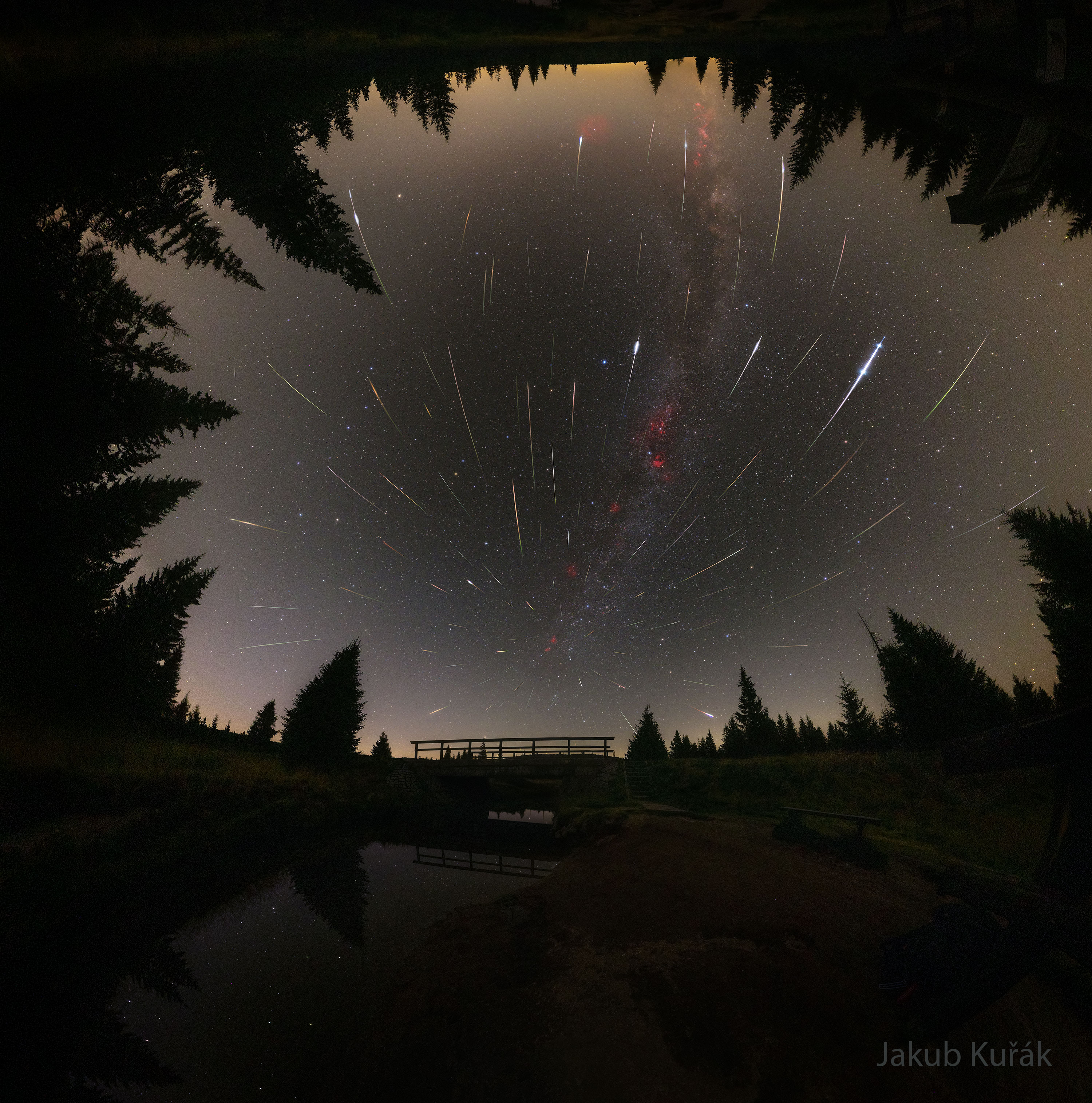
The 2026 Perseids Phenomenon
The Perseids meteor shower has long been a highlight for astronomers and sky-watchers alike, but the 2026 display provided a unique scientific opportunity. Recent telemetry data released by NASA confirms that this year’s shower was exceptionally vibrant, largely due to a rare alignment of celestial events that minimized light pollution from our natural satellite.
The Physics of Swift-Tuttle
The Perseids occur annually as Earth passes through a dense stream of debris left behind by Comet Swift-Tuttle. Although the individual particles are often no larger than a grain of sand, they create spectacular streaks of light upon entering our atmosphere.
The intensity of the display is attributed to the orbital dynamics of the debris. Because the comet's remnants orbit the Sun in a direction partly opposite to Earth's own orbital motion, the collisions occur at high relative velocities. This high-speed impact is what gives Perseid meteors their characteristic brightness and rapid transit across the night sky.
The Role of the Moon
The Moon often acts as a source of natural light pollution, which can wash out fainter meteors. In 2026, the Moon was "busy visiting the Sun." By aligning perfectly to cause a total solar eclipse, the Moon effectively vacated the night sky, providing a dark canvas that allowed researchers to capture the radiant point in the constellation Perseus with high precision.
Frequently Asked Questions
What is the radiant of the Perseids?
The radiant is the specific point in the sky from which the meteors appear to originate. For the Perseids, this point is located within the constellation Perseus.
Why are Perseid meteors so bright?
They are bright because of the high relative velocity at which they strike Earth's atmosphere, caused by the debris stream moving in a counter-orbital direction to Earth.
Conclusion & Practical Takeaways
The 2026 Perseids serve as a reminder of the complex interplay between celestial mechanics and observational science. For enthusiasts, the lesson is clear: tracking lunar cycles and orbital debris streams is essential for predicting the most spectacular sky-gazing opportunities. Stay tuned to RBA News for more updates from the NASA Open Science Data Network.


No comments:
Post a Comment